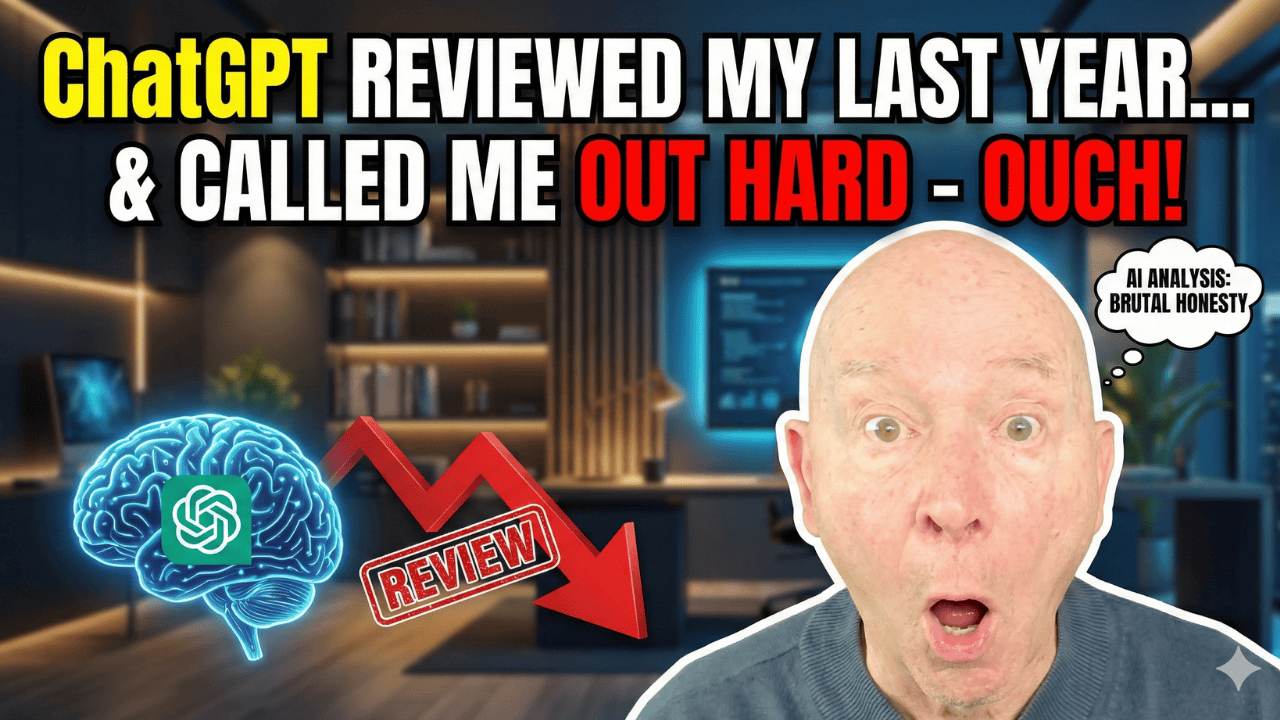
How ChatGPT Becomes Your Ultimate Productivity Coach
Imagine having a personal tutor or coach guiding you through your successes and areas for improvement, tailored specifically to your needs. ChatGPT offers exactly that—a powerful tool designed to help content creators, entrepreneurs, and professionals maximize their productivity and creativity while reflecting on their growth. In this post, we’ll explore how ChatGPT’s year-in-review feature can become your secret weapon for success. Let’s dive in!
What Makes ChatGPT a Unique Learning Partner?
ChatGPT isn’t just a static tool; it’s an interactive experience. Just try that nifty Voice Chat thingy they have. It is like talking to a real person!
Think of it as a highly skilled coach that analyzes your past interactions and provides actionable insights to refine your strategies. Here’s how it works:
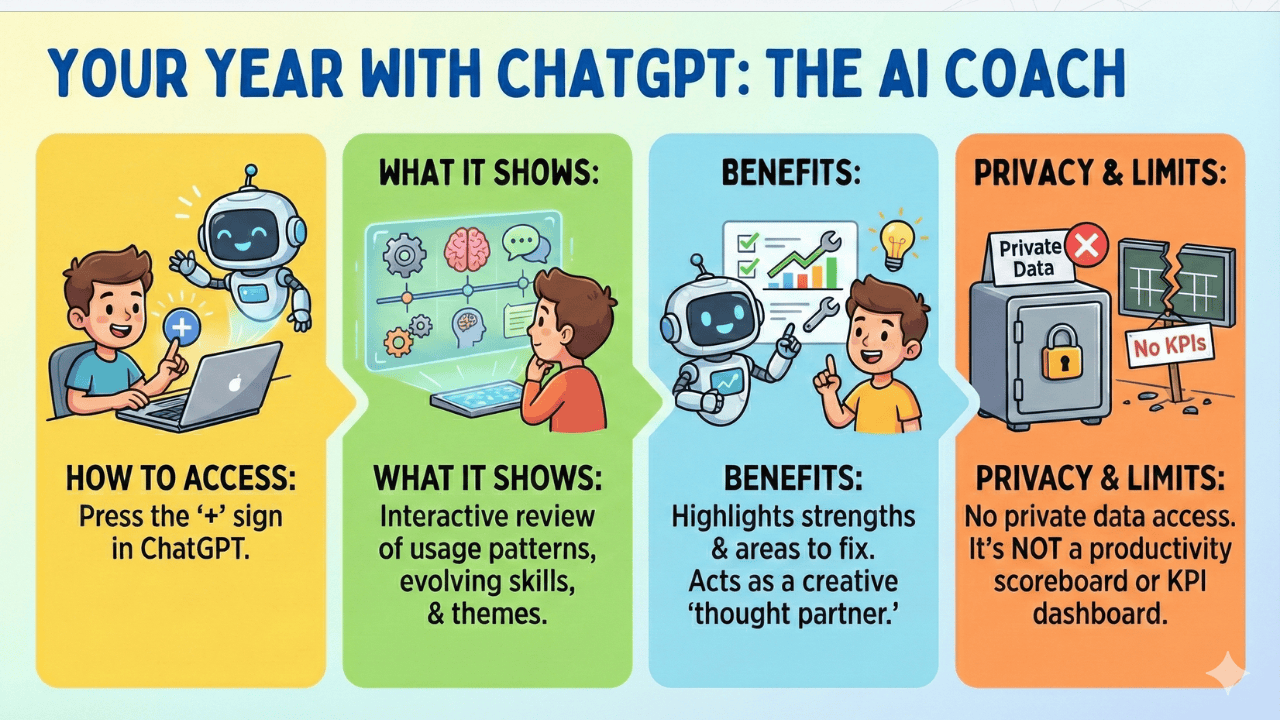
- ChatGPT reviews your patterns and usage over time, highlighting your strengths and areas needing improvement. Mine is now even using humor — which is pretty hilarious unto itself!
- Much like an orchestra conductor, ChatGPT helps you balance your content creation, strategy, and problem-solving efforts.
- It collaborates with you to generate new ideas, refine existing ones, and amplify creativity.
With its ability to spot trends and themes in your work, ChatGPT becomes more than a tool—it’s a thought partner that helps you grow and evolve.
The Year-in-Review Feature: A Game-Changer for Entrepreneurs
One standout feature of ChatGPT is its ability to provide a year-in-review. This unique reflection tool surfaces valuable insights, such as:
- Discover the types of conversations you’ve had—be it strategy, research, or troubleshooting.
- Learn how your skills and approaches have evolved over time.
- Identify topics you frequently explore and projects you consistently focus on.
For example, as a professional speaker and content creator, I noticed ChatGPT highlighting my focus on audience growth and repurposing AI tools. It’s an eye-opening way to understand how your efforts align with your goals.
Why Use ChatGPT for Productivity Enhancement?
ChatGPT goes beyond being a productivity tool; it acts as an insightful assistant that’s tailored to you. Here’s why it’s worth integrating into your workflow:
- It identifies trends and recurring themes you may not consciously notice.
- Use it to outline content themes, plan projects, and set goals for the year ahead.
- Develop richer, more engaging ideas through its collaborative approach.
- Gain instant insights into what’s working and what needs tweaking in your strategies.
From brainstorming to refining, ChatGPT becomes your go-to assistant for making informed, impactful decisions.
Enhancing Your Toolbox: Combining ChatGPT and Other Tools
While ChatGPT is impressive, pairing it with tools like Ask Studio (in YouTube Studio) can elevate your productivity even further. Ask Studio analyzes your YouTube channel, pinpointing moments when viewers drop off so you can optimize your content. Together with ChatGPT, these tools provide a comprehensive way to refine your strategies and create better content. The experience is mind-blowing!
Final Thoughts: Your Next Step with ChatGPT
ChatGPT is more than just an AI tool—it’s a personal coach, creative amplifier, and strategic planner that enables you to reflect, grow, and optimize your productivity. By utilizing its year-in-review feature, you gain insights that help you refine your craft and achieve your goals. So, what are you waiting for? Dive in, explore its features, and let ChatGPT guide you toward success.
Have you tried ChatGPT’s year-in-review feature yet? What insights did you uncover? Let us know in the comments, and don’t forget to visit StarkRavingEntrepreneurs.com for more tips, tools, and resources to fuel your entrepreneurial journey.
Transcript of this episode in English
Terry Brock [00:00:00]:
In today’s world, there’s a lot of competition because the tools are easy to use, and there’s a lot of good AI tools out there. Well, in the midst of that, you’ve got to find out how do you stand out as imminent in the market. Well, there’s a book out that I saw just a little while ago, and I knew I had to share this with you because we talk about AI all the time here. This is gonna give you a chance to take that AI and use it to get the imminence that you need. And the book is called Market Imminence, 22 Strategies to Build a Personal Brand, to Become a Business Celebrity, and to Drive Unstoppable Growth. It’s written by certified speaking professional, CSP, David Newman. David is a friend of mine, and he is an incredibly brilliant marketer and businessman, and a nice guy too. You’re gonna see that in the video.
Terry Brock [00:00:47]:
And what he talks about is several ways you can use those concepts to help you build your business and be the personal branding expert yourself out there. The thing I love about the book, it is so incredibly easy to read. He kept it really short. It’s a different kind of book than I’ve read. I read the thing twice, and already I’ve got several gems out of it. So this is one you wanna see, David Newman talking about market imminence here on Starke Reaving Entrepreneurs. You know, in today’s world, it’s important that you stand out in a prominent favorable way. And one of the best ways to do that for your marketing and for branding is to make sure that you have imminence in the marketplace that you’ve chosen.
Terry Brock [00:01:29]:
That means that what you’re going to do is you’re gonna do several things that are right and some things that maybe you hadn’t thought of. Well, I just read a book recently, a great book called Market Imminence, and it’s written by my friend David Newman. David Newman is a guy that really knows about the marketing area, and I’ve talked with him before. He’s been on our channel before, and I just had to have him come back and tell us about this new book. David, thank you so much for being with us. Thank you for writing that book. Really good piece of information for us.
David Newman [00:01:59]:
Terry, it is a pleasure and a privilege to be back with you.
Terry Brock [00:02:03]:
Well, I wanna get into the details of this and particularly wanna talk about an area where I looked at it and at first brush, I thought, I don’t know if I agree with that. And then I started thinking about it and, well, let’s talk about that a little bit later. But right now, tell me a little bit about market imminence. What do you mean by that and what the book is all about?
David Newman [00:02:20]:
Sure. So the problem that we’re setting out to solve, the problem I’m setting out to solve with the book is what does it take to get you, your product, your service, your company noticed in a very noisy world? And I broke it down into three components, visibility and respect and brand preference. Now very quickly, visibility is simply being seen, being seen by the right people for the right reasons. Respect is about resonating with that audience because you know them so well. You know their pains, problems, heartaches, headaches, goals, dreams, hopes, aspirations, and you’re conveying through that the fact that you get me. You get me. You understand what I’m going through. You know what I’m what I’m up against.
David Newman [00:03:05]:
The third component, brand preference, that is a combination of differentiation and positioning so that it becomes risky, dangerous, and dumb to hire anyone other than you. Those three taken together is my recipe and my formula I call market eminence.
Terry Brock [00:03:26]:
I like that. I think that’s, good. It’s a the combination, like so many things, magic is in the mix. And it’s in a combination of all those in the right way. But one of the things you talk about in the book matter of fact, here, let me just, share my screen with you and with the leaders here. But I think you said I it was really good that at first I wondered about this, where you said you want to define your contrarian slant.
David Newman [00:03:48]:
Yes.
Terry Brock [00:03:49]:
And you say from reading the book here on page, 55, you know, what industry truth, I like the way you put that in quotes, do most people accept that you disagree with? Yeah. What approach do you take that goes against common practice? And what problem do you solve in a way others don’t, can’t, or are afraid to? Tell us
David Newman [00:04:06]:
a little
Terry Brock [00:04:06]:
bit more about that because to me, that is just real golden information.
David Newman [00:04:11]:
Yes. Well, I think the the the common mistake that a lot of us make in marketing sales lead generation is let’s cast a wide a net as possible. And I’m not a fisherman, but I’m imagining that when you cast a wide net, this is where you get the car tires. This is where you get the old rusty bumpers caught in your fishnet. Imagine if you could go to the exact right spot in the ocean or in a lake and you’ve got the right bait and the right boat and the right, all the right conditions just to catch the exact fish that you are looking to catch. So what does that mean? That means that we need to attract, powerfully attract, exactly the right fish and we need to powerfully repel or push away all those rusty car bumpers and old tires and, you know, rusty crab traps and all the other junk and gunk that gets into our net. So by by defining a contrarian stance, this is not something that you put on. This is not a PR gimmick.
David Newman [00:05:17]:
This is not a publicity stunt. This is uncovering what you already believe that is either hurting your prospects, hurting the industry. It’s an outdated practice. It is a half truth or a a myth in the industry that you see a different way. You see a better way. You practice a different methodology because you’re trying to improve, the industry. You’re trying to improve your customer and client outcomes and you are trying to be, more ethical and more in alignment with your values. Now that’s a big that’s a big tall order.
David Newman [00:05:55]:
Right? So I’ll I’ll boil this down to what I call the elephant in the room question. The elephant in the room question and some of the the prompts are, you know, more detailed in the book, obviously. But think about what harsh truth about your industry are clients desperate for someone to finally acknowledge openly, that everyone kinda knows this is kind of the dirty secret. This is like crazy aunt Ethel who you’ve got trapped up in the attic. You can tell people there’s no crazy aunt Ethel up in the attic, but she’s up there singing. She’s banging her broom on the walls. My friends, she’s up there. And the person that is willing to openly admit what is missing, funky, broken, and sad in your industry that no longer helps customers, no longer serves clients, and is an outdated, harmful, or at best anachronistic belief, that person is gonna immediately elevate themselves head and shoulders above the pack.
David Newman [00:06:54]:
So we need a series of these, beliefs and statements, all of which make up your contrarian point of view.
Terry Brock [00:07:03]:
Yeah. I like that. It makes sense. So you’re doing it in a way that’s not antagonistic, not argumentative per se. And I was perceiving it that way, and I think some people could perceive it initially that way until if you’re hear what you’re talking about. What you’re saying really makes imminent sense that this is really what we’ve gotta do, how we need to look at it. Well, another thing you talked about that kinda ties into that somewhat is when we look at the we reject statement. This is on page 82.
Terry Brock [00:07:30]:
I love this, David. The way you said it, say that if you find your opposition, identify one industry practice you refuse to accept. Example, we reject the idea that consulting must be complicated and expensive. And that sentence you put here, you know, we have to complete this, we reject blank, which is why we do blank instead. Tell me a little bit about that more and how we can do that without coming across as, very negative.
David Newman [00:07:55]:
Sure. So the imagine that we are, we’re a law firm, and we’re doing some law firm marketing, which stay awake, folks. Stay awake. Don’t don’t go to sleep quite yet. But law firms are most law firms, about 90%, maybe even more, are still tied to hourly billing. So think about hourly billing as a practice that most people hate. Right? It’s like, oh, my God. It’s $800 an hour.
David Newman [00:08:22]:
A Xerox copy costs $86. It’s like, what is going on? I am being raked over the coals by my law firm. One law firm, mythical. One law firm comes on the scene and says we reject hourly billing because our philosophy is that, we want to get you the most positive outcome, and we are all about results. We are much more committed to getting you to your destination than we are in running the taximeter. So imagine if their tagline was something like no hourly fees. Right? So fixed fees, no surprises, just results. Every other law firm is gonna be losing their minds going, oh my god.
David Newman [00:09:06]:
They called out the elephant in the room. So, yes. Everyone hates hourly billing. Why? Because we are rewarding these law firms and these lawsuits to, you know, the longer it takes to get a good judgment in your favor, the more money they make. Well, if you and I are the client of the law firm, wouldn’t it be the case that the shorter the process, the greater the value? We don’t want this to go on for months and months and years and years. We would like this to be resolved in weeks and months, maybe. So think about and then I also wanted you to think about this from the law firm’s perspective. Why are lawyers in law firms why are the partners why are the associates working a hundred, a hundred and twenty hour weeks? Because of hourly billing.
David Newman [00:09:52]:
Imagine if we disconnected their revenue generation potential from the hours on the clock. What if there was a law firm that says, folks, we get this done in forty hours a week? Imagine the talent that would wanna come work for that law firm. Imagine the investment. Imagine the media coverage of here’s the one law firm in Cincinnati that rejects hourly billing, and here’s why. And so that kind of industry practice, and I think the example in the book that you showed was, you know, consulting is complicated and expensive. What if consulting was simple and affordable, and you could get the professional business advice that you needed that was simple and affordable. So whatever industry practice is very commonplace in your field, is there an aspect of it that you could poke a hole in, go against and start to build a value proposition so that you have a better, smarter way that serves your industry, serves your ultimate customers in a way that competitors would lose their minds. They would lose their minds because you were the first one there, and it is it is tough to be in a me too position when there’s a trailblazer already ahead of you.
Terry Brock [00:11:10]:
David, I love the way you say that. I’ve talked about that for many years, the idea of when you go out and buy a car. Let’s say you were in the market for a car. Yes. You know the kind of model you want. You know it needs to have this many, horsepower or you’re gonna use it for this function or that function. You really don’t care how long it took the manufacturer to make that. If they took three years to make that one car, well, okay.
Terry Brock [00:11:34]:
What matters to me is does it do the things I want? Is the price right? Is it in good shape? Do you have good follow-up service? I think there’d be a number of questions we have. And so I think what you’re saying there really makes imminent sense. And when you look at those things that are important to the people and how they’re going to, react to it. You know, that relates to another thing you said in the book, I think was very good here where you talked about some of the results that we are getting and when we get it. Being able to create the tools, templates, and frameworks that people can use immediately.
David Newman [00:12:03]:
Yes.
Terry Brock [00:12:04]:
Making that available offering insights and guidance to get results even before the prospects commit to working with you Yes. To solve a small problem completely rather than a big problem partially. These are great ways to start giving some results to people and let them see, okay. This is what we’re gonna get when we work with tell me a little bit more about that and how that leads to market imminence.
David Newman [00:12:26]:
Yeah. So that section is from the section about generosity and and gifts as far as market imminence is concerned. The way I like to describe this to my audiences is this is happy meal marketing. So your clients that buy from you, they get a beautiful seven course meal. Terry, they get the white table cloths. They get the five different kinds of wine glasses. They get that, you know, the five different kinds of forks and knives. I’m not sure what that little knife is with the notch in it.
David Newman [00:12:54]:
Is that a butter knife? Is that a fish knife? What is that? It’s a fish knife, my friends. Don’t use that on the butter. But that’s what they get. They get a beautiful, amazing seven course meal. People who just encounter your marketing do not buy anything, no money changes hands, they still need to get a happy meal. So is your marketing too good to throw out? Are your emails too valuable to delete? Are the mailings that you send out if you still send out mailings? Are those mailings people things that people wanna keep, pass along to their boss, or post up on their office wall? Because if they’re not, then you’re just wasting time, wasting bandwidth. There’s nothing valuable in what you’re saying until people buy from you. So, obviously, everyone listening, once people buy from you, once there’s a transaction going on, you are amazing.
David Newman [00:13:49]:
You are fantastic. You are brilliant at the work you are doing. Imagine if we move just a little segment of that work. Instead of after the credit card clears or the check clears, move that to before. Move that to before the credit card and before the check and put the post sale value into presale value because the presale value is what people make a buying decision about. Everyone else is hoarding. Right? Everyone else is hoarding their stuff. Oh, Terry.
David Newman [00:14:18]:
That’s my good stuff. I can’t give that away. Oh my gosh, Terry. I can’t do that. That’s why we get the big bucks. All of those statements are self serving and somewhat delusional. So rather than self serving, it should be client serving. It should be prospect serving.
David Newman [00:14:35]:
It should be community serving. You need to be radically helpful and radically generous before any money changes hands. You start getting into that habit, and again, you will rise head and shoulders above everyone else that does what you do or who looks like they do what you do.
Terry Brock [00:14:53]:
David, you are so right. Radically helpful, radically generous. I love the way you put those words together, and we usually don’t hear that juxtaposed with each other.
David Newman [00:15:01]:
And I
Terry Brock [00:15:02]:
think, hey. That is brilliant. And by the way, David, you do that in your life. I’ve known Neil, you and I have known each other through the National Speakers Association, and you live that. And that really helps, I think, just as a human being, but also when they taught us in business school. It was good to be kind to people. You know? Because business goes better when you do that. And one of the ways we do that also, that I love you mentioned in your book, I was actually, again, a little bit surprised it’s here.
Terry Brock [00:15:26]:
But then once I read the first few paragraphs, I realized, of course, this makes all the sense in the world, something that well, here, let me share this with you again. This is, here on the book here, you say how to think about working together and helping others. So what you’re talking about in being radically generous and helping other people, find alliances and collaboration where you sit here, no brand succeeds alone. The right partnerships can open doors to new audiences, strengthen your credibility, and create opportunities that would be impossible on your own. Smart collaborations accelerate growth by leveraging each partner’s unique strengths. I think that is so important that we look at it and we see what’s available, how we can do that, and the capabilities of it. Tell us a little bit more about that.
David Newman [00:16:12]:
Sure. So, you know, I think most entrepreneurs, most CEOs, most founders have some level of superhero syndrome, meaning that they feel that they are the ones that need to make everything happen in their business. Right? Whether it’s lead generation, getting media, hiring talent, you know, we have to figure this out on our own. We are in a vacuum. We are the smartest ones. We we can’t rely on others. We we should not be dependent. We shouldn’t be hiding behind partnerships or affiliations and so forth.
David Newman [00:16:49]:
So there’s this sort of, what I call unproductive independent spirit. Whereas if you look at the truly successful companies, the mega successful companies, they have alliances. They have partnerships. They have channels. They have they have, you know, whether it is a franchise model, a dealer model, a distribution model, they have partnerships that that help them to extend and multiply their reach into all the other places that they wanna go. So think about rather than thinking, you know, I’m a solo. I’m a, you know, I need to figure out everything on my own. Figure out who else is in your ecosystem that you could partner with, that you could create content together to share with your respective communities and audiences.
David Newman [00:17:47]:
There are all kinds of partnerships that can be created. There are content partnerships. There are marketing partnerships. There are product and service development partnerships where it’s like, hey, let’s take service a from your portfolio. Let’s take service c from our portfolio. Let’s put those together and then we’ll jointly market that as a one plus one equals 10 type of offer because that one company has a certain skill set and a certain specialization. We have a certain skill set and a certain specialization. And this is like the old Reese’s peanut butter cup commercial.
David Newman [00:18:23]:
Oh, your chocolate got into my peanut butter and oh, but your peanut butter got into my chocolate. And those two great tastes taste great together. Yes. I know all the candy commercials from the 1970s and eighties. I’m sorry, my friends. But that that level of collaboration and innovation and partnering mindset. And a lot of people go into these partnerships. Just last quick thought on this with what can I get out of it? And that is a secondary concern.
David Newman [00:18:54]:
The primary concern and what will make you a good partner and what will make you a company or a CEO that others want to partner with is how can I add value to my partner? How can I add value to their clients? How can I add value to their network? How can I give, how can I add value? How can I connect more to make them look like the hero of the story? That kind of partner will never be short of partnership offers and partnership deals that come down the highway.
Terry Brock [00:19:26]:
The book is called Market Imminence. It is a fabulous book, and I gotta say something to you. Those of you watching this and listening to this, I have read many books that helped me and seen them through the years. This one is right up there at the top, one of the best I have ever seen, and I’ve read a lot. Also, I gotta tell you, this reader to reader, the way that David structured it, it’s written so that you can read it very quickly. You can probably go through this an hour to two hours easily, which means you’re more likely to consume it. This is one that you want to read. If you are a solopreneur, if you’re in a small business, you wanna read this.
Terry Brock [00:20:01]:
But I would even say if you’re in a larger corporation, this is one that’s good for you as a person as well as for your company, a book that you wanna get, you wanna start looking into and see even more. David, before we let you get away, I wanna, share something with the folks and with you that you put, I think, in closing really good. It was on page one eighty nine here in your book where you talked about, as you’ve seen this book, isn’t just about personal branding. It’s about market domination. Yeah. Really, that’s what you’re doing here with these keywords, visibility, credibility, power, status, and respect. David, before we let you get away, tell us about how those words blend into becoming strong in market dominance and any and, any other type of idea and things that you’ve seen that are working particularly well. What would you see are those?
David Newman [00:20:51]:
Sure. So I think some folks reading the book and some folks watching us now might bristle or have just the negative reaction to this word dominance because the way that that word has been used, it’s dominating others, bullying, forcing your way through, not caring about others’ success. This sort of turns that a 180 degrees on its head. So, yes, you will be dominant in your market because you will be the most caring, the most curious, the most concerned, the most committed to the betterment of your industry, the betterment of your clients, the betterment of your partners, the betterment of the future, not only of your company, but perhaps of your industry and maybe of business in general so that you become the good guy. Literally, you become the good guy and the good gal in your business landscape that is trusted, is admired, and is mentioned as the exemplar in your industry because that’s really what market eminence means. Market eminence I mean, the word eminence specifically means fame or recognized superiority. Notice the word recognized superiority, especially in a sphere or profession. That is what that level of attainment will get you even if you implement let’s say you implement a quarter of what’s in the book.
David Newman [00:22:19]:
Let’s say you implement a third of what’s in the book. The bar is so low because all your competitors are playing it safe and none of them are doing any of these things because they’re so committed to blending in. And if you’re willing to just take a couple of initial baby steps, test the waters, see what Terry and I are talking about, I think you will start to see some amazing results coming back from the marketplace.
Terry Brock [00:22:44]:
Absolutely. David, you have put forth a book that is really game changing, helping many of us. I know for me, it really has, and I greatly appreciate what you have done, my friend. We’re putting that out there together. And for those of you that are watching this, think about what we’ve got here. This is a book that I highly recommend you get into because it’s, again, very easy to read. I have read the book not once, but twice already and plan to go back, do it many more times because, first of all, again, it’s real easy, succinct bites, very easy to use, and it can definitely change the way that you look at it. Be careful because you might be like me who I’ve initially hear a term I think, I don’t know about that.
Terry Brock [00:23:22]:
Well, when you read about it, you go, oh, okay. It enlightened me. Let me see it from a different point of view that I really like, and I’m glad that I did. So, David, before you leave, how can someone get in touch with you if they say, hey. I wanna get to know this guy, David, a little bit more. How can they reach you?
David Newman [00:23:39]:
Sure. So two things. The first thing is if they want to get more into the market, eminence methodology, training, and tools. There’s all sorts of freebies, free bonuses, training, worksheets, some AI prompts that will help you implement some of the ideas in the book. That’s at marketeminence.com. And then the rest of my empire is at doitmarketing.com, and that’s where you can get in touch. That’s where there’s a blog. There’s a podcast.
David Newman [00:24:05]:
There’s all kinds of other free resources. But the primary place to go to get these ideas that Terry and I are talking about is marketeminence.com.
Terry Brock [00:24:14]:
Very good. David, thank you for being here, and thank you, dear viewer, dear listener. As you’re reading this and watching it and seeing what’s available, this is something you wanna look into. See what is available and how you can really have imminence in your marketplace. This is critical for you to help others in many different ways. This is what Gina and I do at Stark Grieving Entrepreneurs, helping people like that. And starkgrievingentrepreneurs.com would be where we can get in touch with you, where you can reach us and find out information as well. I’m Terry Brock.
Terry Brock [00:24:43]:
And for David Newman and the rest of the staff here at Stark Raving Entrepreneurs, thank you for joining us. And think about ways that you can take these principles in that book. Go ahead and get the book. It’s really worth it. A few coins, you’ll be glad that you spent on that, investing in yourself and in your future. Thank you for joining us today. We’re looking forward to hearing from you.
Transcript in Spanish
¿Cómo te gustaría tener un tutor especial que esté ahí, mostrándote lo que has hecho, lo que salió bien y lo que necesitas mejorar? Esto es lo que está disponible en ChatGPT, y puedes hacerlo ahora mismo. Voy a mostrarte cómo funciona esto en este video, junto con otras cosas realmente buenas. Aquí está. Tal vez veas eso y reconozcas que es de ChatGPT, tu año con ChatGPT, y eso es en lo que nos estamos enfocando aquí en esa esquina inferior derecha. Obtienes eso cuando presionas el signo de más al hacer una pregunta en ChatGPT. Bueno, acabo de hacer eso, y tengo que decirte, es increíble. Revisa tu año, lo que hiciste bien, mostrándote tus fortalezas y dónde realmente estás. Y lo miré y pensé, eso está bastante bien.
No me di cuenta de que estaba haciendo eso. Pero aquí está, diciendo eso, que obtuvo de los artículos que estaba escribiendo, las voces que puse a través de ChatGPT. Ahora, esto es algo que estoy compartiendo con el mundo, así que no hay un gran problema de privacidad con eso. Esto no está tocando cosas que quieras mantener privadas, tu información financiera, cosas como registros médicos y otra información que todos queremos mantener en privado. No significa que estemos haciendo algo malo. No. Solo que hay áreas que no quieres que el mundo conozca. Pero esto de aquí, podemos usarlo en ChatGPT para descubrir lo que estamos haciendo, para que ChatGPT actúe realmente como un tutor o coach bien entrenado y de alto nivel que te ayuda en las áreas específicas donde lo necesitas.
Esto realmente me está dejando asombrado. Así que lo que quiero hacer es mostrarte parte de lo que obtuve. No te voy a mostrar todo porque me dio algunas cosas sobre mí que pensé: “Oh, es cierto. Oh, tal vez eso funcione”. Y decía: “Tus fortalezas están aquí, Terry”. Pero también: “Por aquí, la estás regando un poco. Vamos, Terry. Ponte las pilas”.
No tienes que hacer eso. Y también utiliza un lenguaje que me parece bastante agradable por la forma en que lo hace. Me muestra lo que está pasando. Así que volvamos a esto. Lo que hice fue obtener esto de ChatGPT, preguntándole sobre eso y luego lo pasé a Google Docs para poder revisarlo y analizarlo. Así que puse un prompt aquí: “¿Qué es tu año con ChatGPT como función aquí y qué puede hacer?” Y entonces ChatGPT respondió esto. Mira esto:
Gran pregunta. Esta función realmente es útil cuando se usa intencionalmente. Ahora, me gusta la forma en que lo dijo. Aquí dice que debes pensar en la versión de ChatGPT del repaso anual como una experiencia de revisión e interacción, pero enfocada en cómo usaste ChatGPT en el año pasado. Es una experiencia de reflexión interactiva, no solo una solicitud estática. Esa es la belleza de esto, no solo te dice, “aquí está lo que hiciste”. Simplemente está ahí.
Y estamos acostumbrados al Google de antes, ya sabes, como por 2021, 2022, etc., antes de que salieran todos los LLM (modelos de lenguaje grandes). Ahora hay que pensar más en términos de una interacción, así que debes tratarlo, como nos gusta decir ahora, como un director creativo. Hablamos antes de ser creadores de contenido, y lo seguimos siendo. Creamos contenido en forma de video, audio y cosas así. Pero ahora debes verte como un “director creativo”: piensa en un director de orquesta que está ahí, sabe cuándo debe destacar más los metales, cuándo los instrumentos de viento, o la percusión. Un buen director sabe cuándo debe apoyarse en un grupo o en otro, o cuándo hay que dejar un momento de silencio.
Los directores hacen eso bellamente. Pues eso es lo que tú y yo podemos hacer, y esta es una de las formas en que podemos aprender a dirigir la creación de contenido cada vez mejor, porque te da cosas muy buenas y podemos aprovecharlas. Mira lo que dice aquí. Ah, y por cierto, ¿ves esa imagen que puse ahí? La creé en Gemini, usando Google Docs. Fui y le pedí que creara una imagen de un hombre. Lo describí con mis palabras, un hombre de cabeza rapada, no calvo, pero sí rapada.
Pensando en cosas, reflexionando, y todo eso. Solo quise ponerlo. Lo hice para mí. ¿Vale? Tú haz lo que sea correcto para ti. Pero ¿ves lo que muestra? Dice que puede mostrarte, cuando lanzas “tu año con ChatGPT”, suele enseñarte patrones de uso, los tipos de conversaciones que tuviste más: aprender, escribir, estrategia, investigación, resolución de problemas, cómo ha evolucionado tu uso durante el año, desde una curiosidad inicial hasta un uso más profundo o avanzado, cosas así que pueden ser muy, muy útiles y te muestran lo que hay. Y descubrí que esto fue muy bueno y pensé, una de las preguntas que le hice fue: ¿Esto es durante un año calendario? Porque recuerdo que lo recibí hace unas semanas. Es enero mientras grabo esto.
Y en diciembre me mostró: “esto es lo que hiciste”. Dije, bueno, ¿puedo ver los últimos doce meses? Y respondió que no, que eso aún no lo hacen. Pero lo que sí puedes hacer es decir: muéstrame el año y ahora dime los tres meses más recientes. Pensé, ok, no lo he probado aún, pero sería bueno revisarlo, ver cómo usarlo y las aplicaciones posibles. Me gustó lo que decía sobre los temas a los que volviste una y otra vez, los temas que exploraste varias veces, proyectos de largo plazo, intereses o áreas problemáticas, tendencias de desarrollo de habilidades. Eso está bien.
Como las herramientas de IA que tienes, la investigación de contenido que haces y la creación de contenido, aprendizaje de idiomas, estrategia de negocios. ¿Ves? Recuerda todo eso de las conversaciones que tengo. Y esto subraya la importancia de usar ChatGPT. Yo prefiero con el modo voz, así simplemente tomas tu teléfono y hablas con él como si estuvieras hablando con un amigo muy listo o un muy buen becario que te ayuda. Recuerda, tú tienes el control. ChatGPT y los otros LLM que usamos y nos encantan son subordinados a nosotros como seres humanos. Lo hacemos para los humanos. Así que ahora lo que tenemos que hacer es ver realmente para qué es útil.
¿Por qué usarías esto? ¿Cuáles son los verdaderos beneficios de usarlo? Bueno, quise averiguarlo por mí mismo, así que fui a ChatGPT. Y cuando le pregunté para qué sirve, especialmente para alguien como tú (aunque cuando dice “tú”, en realidad se refiere a mí), me conoce, Terry Brock, y empieza a conocerte. Así que esto es bueno como un amigo. De nuevo, hay cosas que mantenemos separadas y que no serán públicas, pero otras sí. Esto es donde se pone interesante. Para creadores de contenido, oradores, consultores, emprendedores, te puede ayudar. Y ves que se centraba justo en las áreas en las que estoy.
Esas son áreas donde hago mi trabajo, como orador profesional, creador de contenido, y suma todo eso, y detectará patrones que ni siquiera habías notado conscientemente. Eso está muy bien. Dice, “oh, sigues volviendo a ciertos temas de ida y vuelta”. Y para mí, se trata de reutilizar herramientas de IA y crecimiento de audiencia. Eso es clave en el trabajo que hago para mi público. Ellos quieren saber cómo usar estas herramientas, cómo crecer audiencias y qué hacer. ChatGPT lo sabe, y lo detecta. Eso ayuda mucho en áreas particulares.
Y lo que hará entonces es, verá dónde ChatGPT ha trabajado conmigo y dónde se volvió asistente de investigación, socio de ideas (me gusta ese término, socio de ideas), alguien con quien puedes conversar para sacar ideas, un amplificador creativo. Esas son cosas importantes. Y utilízalo como insumo para la planeación, para temas de contenido para el próximo año. Si quieres saber qué buscan las personas, también te dará eso.
Y lo uso en el trabajo que hago como orador profesional, cuando hablo ante audiencias, para las charlas, talleres y los marcos que hemos estado rondando y nombrando, aunque todavía sin darles nombre. Así que llega a eso un poco más tarde. También te dice lo que no es. Dice, “seamos francos”. Esa parte me gusta. Llega y dice: “ok, te lo diré directo”, y eso es porque se lo puse en el prompt. Te animaría a hacer lo mismo.
Dile que no se contenga. Dile: dame la verdad brutal, lo que hago bien y lo que debo cambiar. Y así lo sabremos. Hace eso muy, muy bien en su forma de trabajar contigo y ayuda de una manera profunda. Me gusta cuando dice que no es un marcador de productividad, no está juzgando. Por cierto, aquí tienes otra de mis imágenes. No es sobre uso bueno o malo.
No está pensado para reducir o reemplazar analíticas o métricas de negocio. Si entras esperando paneles y KPIs (esos indicadores clave), te decepcionará o no te sorprenderá. Si entras con curiosidad sobre cómo piensas y creas, es sorprendentemente perspicaz. Así que recomiendo que lo pruebes. Tengo como 53, 54 páginas en Google Docs de lo que obtuve, de un experto revisando lo que hago bien y mal. Cuando uses esto, hazlo en ChatGPT, en la versión 5.2; y creo que esto está disponible gratis, pero no estoy seguro. Yo uso la de pago, la de $20 al mes, y eso ayuda mucho.
Y por cierto, esto es muy similar a otra herramienta que realmente recomiendo, llamada Ask Studio con YouTube Studio. Ask Studio es lo que buscas. Lo que hago con eso es que analiza mi canal de YouTube y mis videos y detecta dónde la gente dejó de ver y se fue.
Y cuando empezamos a ver un punto común, eso es una buena señal que me dice, “Terry, estabas hablando de tal y tal cosa aquí”, o lo que sea. Y cuando mencionas tal cosa, la gente se va. Así que no la digas más. ¿Entendiste la idea? Así podemos asegurarnos de que está ahí. Así que apúntalo.
Si tienes un canal de YouTube, probablemente lo estés usando, y me encanta, tanto para aprender como para crear. Y asegúrate de darte una vuelta por nuestro canal de Stark Raving Entrepreneurs en YouTube para ver lo que hacemos ahí. ¿Qué piensas de esto? Eso de preguntar a ChatGPT tu resumen del año, qué pasó cuando usaste ChatGPT y cómo funcionó. Cuéntame qué te parece, cómo te va con eso, porque esto puede ayudarte y nosotros queremos ayudarte en Star Craving Entrepreneurs. Gina Carr, mi socia, y yo trabajamos en esto, para mostrarle a la gente cómo hacerlo y cómo empezar a lograrlo en el mundo real. Tenemos un equipo y muchos miembros de todo el mundo que vienen, reciben respuestas a sus preguntas en un ambiente realmente sin censura, pero muy amigable y de apoyo.
Nos gustaría que te acerques, que nos visites y dejes algún comentario. Y además, vamos a estar hablando de muchas otras cosas en el futuro. Así que asegúrate de pasarte a ver lo que tenemos y cómo te ayudaremos aquí con la idea de “vive y deja vivir”. Que puedas hacer lo que quieras, pero sin dañar a otros ni tomar lo que no es tuyo. Así lo decimos aquí en Stark Raving Entrepreneurs, para ayudarte. Así que ven, visita starkravingentrepreneurs.com. Encontrarás cosas muy útiles y podremos ayudarte a conseguir buena información que necesitas de formas poderosas. Así, podrás obtener información realmente útil en tu día a día.
Bueno, soy Terry Brock con Star Craving Entrepreneurs. Quiero enseñarte eso de lo que hablé de Ask Studio. Sí, cuando metí la pata hace un rato. Ask Studio es realmente bueno y tenemos un video aquí que te lo muestra, cómo funciona y cómo puedes usarlo. Prepárate para quedarte boquiabierto cuando lo veas. Gracias por acompañarme hoy.
¡Listo! Así tienes la transcripción completa del episodio en español. Si deseas los timestamps también, solo dime y los agrego.